
When “Keeping the Peace” Starts Hurting the Work.
Rebuilding our muscles for hard conversations, honest feelings and hopeful leadership.

March turned into a surprise growth‑spurt month for me. Not in the shiny promotion‑announcement way, but in the sense of sitting in rooms with women who have shaped how I think about work, relationships and being human – and recognising very clearly what I want to do with that in my own practice.
I'm the founder of Algorhythm, partnering with governments, health and community organisations to make complex work simpler and more human. I spend a lot of time inside systems that are under pressure, and I care deeply about how we do that work without burning people out.
This commitment didn't start this year. It's been shaped over years of watching how big systems move, how people cope, and how often we confuse "busy" with "effective". What has shifted this year is my calibration: I've faced the arena (to borrow from Brené Brown), paid closer attention to my body and my business, and stayed curious about how I show up, respond and react when things get hard.
Before I share that "inside out" story, this is the "outside in" view – the ideas that lit the fuse.
In the space of a few weeks, I listened to three people whose work has quietly been guiding me for years: Esther Perel, Susan David and Jacinda Ardern. This sat alongside insights from the brilliant Ben Crowe, Steve Martin and Gary Stevens – whose influence I'll come back to another time. But given I wrote this in Women's Month, it feels right to focus here on the women whose work has been front‑of‑mind for me this year.
On paper it was "professional development". In reality it felt more like being handed a language for things I've been circling for a long time.
Esther Perel: friction as a feature, not a bug
Esther spoke about the importance of physical human connection in the workplace – embodiment – and how the "smoothness" of our online interactions has quietly eroded the depth of our work relationships and, with them, parts of our identity.
Her point was confronting and clarifying: our ability to avoid friction – cancelling at the last minute, cameras off, staying home – has reduced our tolerance for interactions that contain tension or conflict. Leaders and organisations are out of practice at giving real feedback, having hard conversations and addressing underperformance. When that happens, organisations underperform, our collective resilience dwindles and we stagnate.
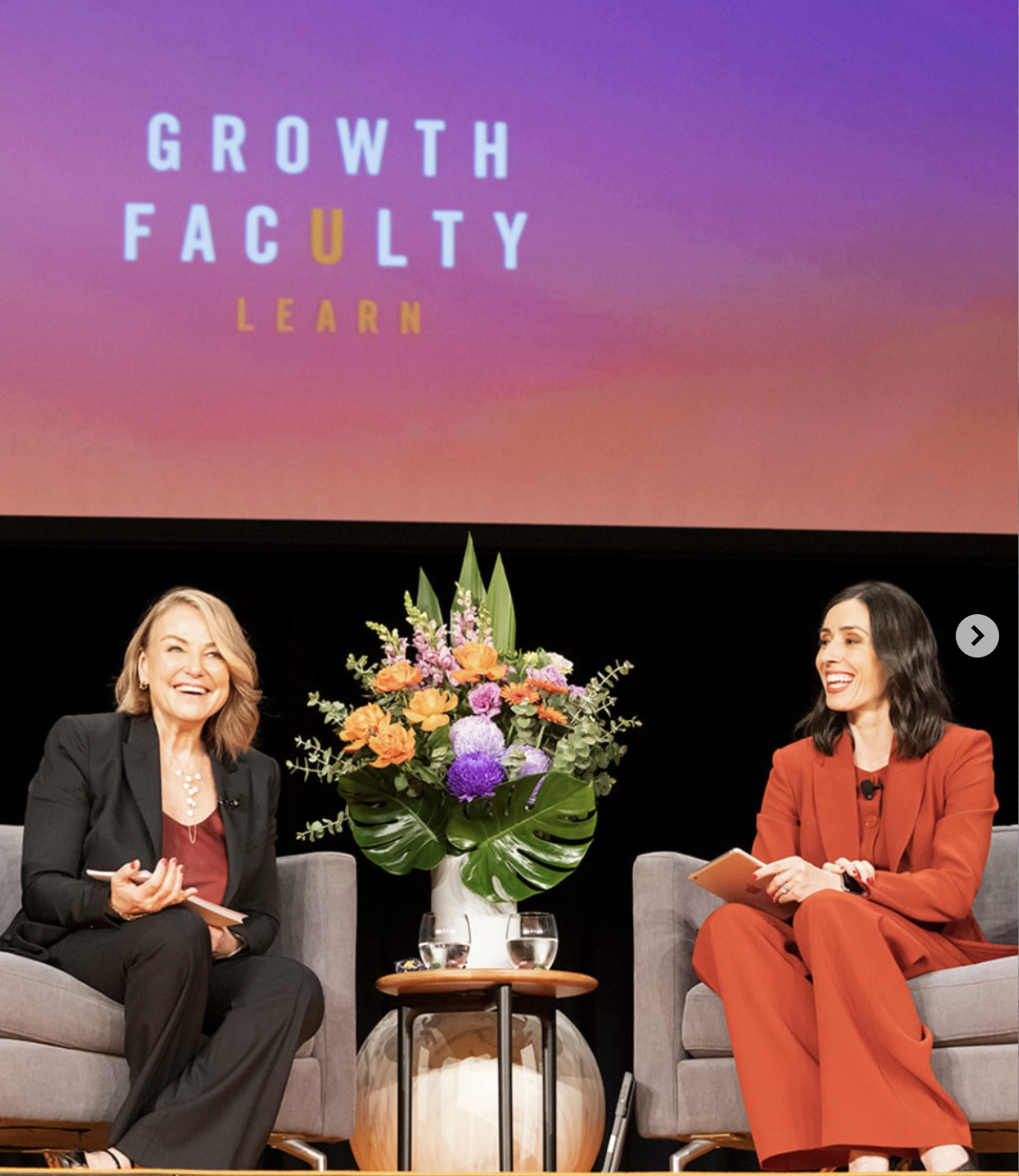
Image Source: Grow Faculty, Instagram post for ‘LeaderSHIFT- from Survival to Transformation’. Esther Perel (left) sits in conversation with MC Holly Ransom (Right)